
Resilient by Design: What Uncertain Markets Reveal About Regional Property
Wholesale investors have grown more selective about where capital is placed across Australia over the past year. Global trade disruption, sustained interest rate increases and volatility across listed markets have prompted a reassessment of risk. Property has become a preferred destination for many, though the divide between assets holding their ground and those under pressure has become increasingly clear.
Luke Barker, Funds Management Executive at XCap, has been working through those questions with investors and advisers for the past several months. His view is that the current environment is sharpening opportunities for well-selected regional commercial property rather than weakening it.
 Luke Barker
The Volatility Gap Between Sydney and Newcastle
One of the clearest observations Luke draws from watching both markets is how differently they move through cycles over time. Sydney’s property market tends to spike and correct sharply. Newcastle follows those movements by approximately six months, but the range of movement is considerably lower.
“Businesses and individuals in the Hunter can look at a downturn and say, yes, things are moving, but we have seen this before and we know how it plays out here,” Luke says. “That confidence comes from experience of a market that does not swing as hard.”
That steadiness reflects an economy supported by health, education, defence, logistics and professional services. These are sectors that generate consistent demand regardless of what is happening in listed markets.
Newcastle’s Office Market and the Commute Difference
At a national level, office has been one of the more scrutinised asset classes over the past year. A cultural shift towards working from home has reduced demand for space in Sydney and Melbourne, with larger occupiers pulling back their footprints and vacating B and C grade buildings. That shift has concentrated remaining demand in A-grade stock, and even then, getting workers back into CBD offices in the major cities has remained a challenge.
Newcastle has experienced that period differently. For a lot of workers in the Hunter Region, commuting from the home to the office takes fifteen to twenty minutes. That close proximity changes the daily decision around attendance in a way that long commutes do not allow.
“In the Hunter, getting to the office is not a significant ask,” Luke says. “A lot of people still go in, because it simply makes sense for them.”
Newcastle’s A-grade office market has maintained strong occupancy as a result, supported by tenants drawn from health, legal, insurance and community services sectors whose operations are tied to being present rather than working remotely. The XCap Core Plus Income Fund holds Darby Plaza in the Newcastle CBD and a single-tenancy interest at Macquarie Tower in Charlestown, both fully leased on long-term agreements to established occupiers including Allianz Insurance, Life Without Barriers, Slater and Gordon and Turks Legal. With limited new A-grade supply coming to market in the near term, the assets are well placed to sustain full occupancy.
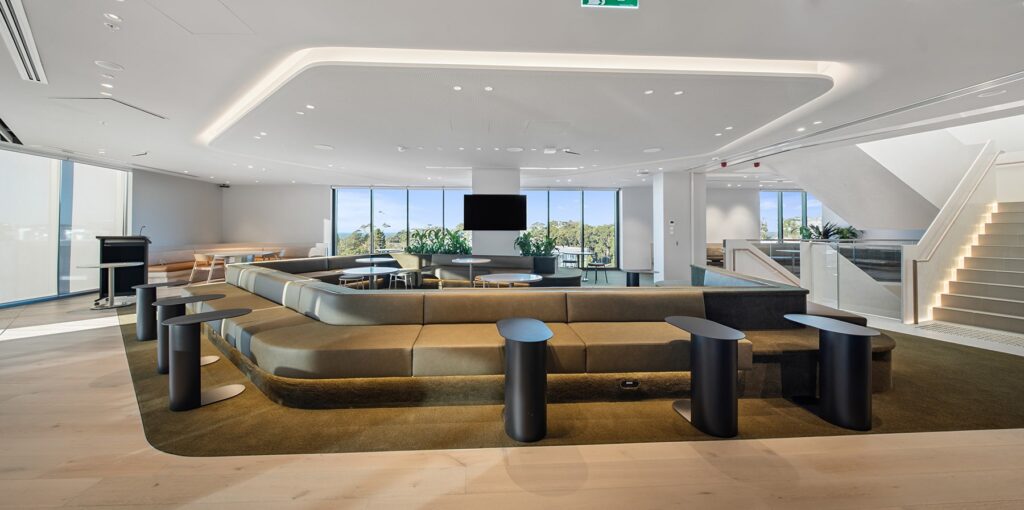
Allianz tenancy at Macquarie Tower
Large Format Retail Demand and the Heatherbrae Income Profile
Large Format Retail capital has followed a similar pattern to office over the past year, concentrating in centres anchored by tenants serving practical, consistent demand rather than discretionary spending. Large format retail, fuel and fast food have held up well precisely because the activity driving visits to those centres does not depend on consumer confidence or disposable income in the way that other retail formats do.
The XCap LFR Heatherbrae Fund will hold the Heatherbrae Supa Centre, which sits at the junction of the Pacific Highway and the M1 motorway, capturing local trade and traffic moving between Sydney, Newcastle and Northern New South Wales. Its tenancy mix across bulky goods retail, fast food and fuel serves an essential demand that does not ease when sentiment or spending softens.
“You need fuel. You stop for food,” Luke says. “That demand is always there.”The Hunter Region’s reliance on private vehicle transport reinforces that dynamic. Public transport options are less frequent than in the major cities, so driving is the norm and centres like Heatherbrae sit directly in the path of that daily movement. The Centre is currently 100 per cent occupied across all nine tenancies, with national retailers committed on long-term leases. That outcome in a newly built asset along one of the region’s primary corridors reflects genuine tenant confidence in the location.
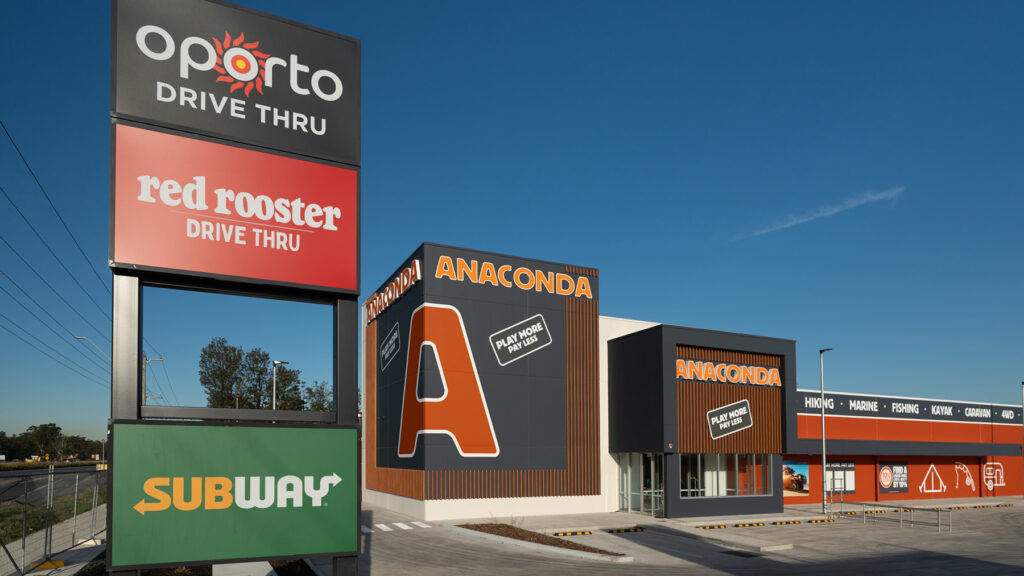
Heatherbrae Supa Centre
Thirty Years of Experience Behind Every Tenant Decision
The tenant quality across both funds is not incidental. It is the product of a deliberate selection process shaped by XCap’s alignment with GWH, its development and construction delivery partner with more than thirty years of experience building and operating assets across the Hunter Region.
That history matters most when conditions are uncertain. GWH has delivered projects through the GFC, COVID and multiple property cycles. The experience of watching which tenants hold their commitments through difficult periods, and which do not, informs every leasing decision that flows into XCap’s funds.
“You know what to avoid because you have seen what happens to certain operators when conditions turn,” Luke says. “The tenants you want are the long-established ones with proven track records.”
That alignment between delivery experience and fund management is what distinguishes XCap’s approach. “In uncertain times, investors want assets with durable demand and tenants that can hold their ground. That is exactly what XCap is focused on bringing to market.”